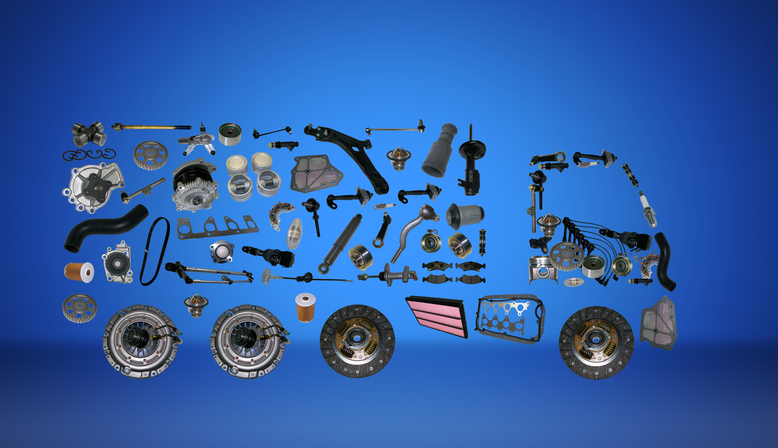
In automotive distribution, availability is everything. Customers don’t remember the hundred parts you had in stock. They remember the one part you didn’t. That reality is why automotive supply chains carry so much inventory, and why most teams hesitate when leadership starts talking about “optimization.” Cutting inventory is easy to say. Protecting coverage while doing it, is not.
Here’s the hard truth many automotive teams are running into: Parts coverage decisions don’t scale with rules, spreadsheets, or manual planning.
That’s where supply chains begin to quietly break down.
The Real Challenge Isn’t Ordering Parts, it’s Deciding Where They Belong
Most planning tools focus on replenishment: how much to order, when to order, and from which supplier. Those are important questions, but they assume the hardest decision has already been made.
In automotive, the hardest decision is coverage.
- Should this part live in every store or only at the hub?
- How much depth does it really need at each location?
- Which parts justify local risk, and which can be supported upstream?
- How quickly can inventory move between locations if demand shifts?
A distributor with tens of thousands of parts across dozens of stores isn’t managing hundreds of decisions. They’re managing millions of part-location tradeoffs, and demand doesn’t stay still long enough for static logic to keep up. At first, most teams assume the pressure they’re feeling is temporary, a tough year, a few new lines added too quickly. But over time, it becomes clear something more structural is happening. The planning approach that worked when the parts catalog was smaller and demand was more predictable simply isn’t keeping up.
Then the problem compounds.
Why Parts Proliferation Breaks Traditional Planning
Automotive supply chains don’t get complicated all at once. They get complicated one part at a time. Before long, the parts catalog grows faster than anyone planned, and faster than the logic designed to manage it. The challenge is that parts don’t behave uniformly. Some sell every day in one market and barely move in another. Others may sell only a few times a year, but when they do, being out of stock isn’t acceptable. A part that looks slow at the store level can be critical when viewed across the network.
As complexity grows, teams compensate the safest way they can: they add buffer. Safety stock increases. More parts get pushed into more locations. Coverage improves, but efficiency erodes.
Eventually, inventory grows faster than sales. Buyers spend more time shifting parts than improving strategy. Leadership starts asking harder questions about working capital, and planners are left defending decisions that once made sense but no longer scale. This isn’t poor execution. It’s what happens when a network-level problem is managed with location-level tools. As coverage becomes harder to defend, teams add more rules and guardrails, until the next limitation shows up.
Why Rules and Spreadsheets Hit a Ceiling
For many automotive supply chains, this is when planning shifts from improving outcomes to simply maintaining control. Spreadsheets work, until they don’t.
Experienced buyers can manage parts coverage with rules, reports, and instinct for a long time. They know which parts matter, which can wait, and where they’re willing to take risk. That approach works at smaller scale, especially when demand is stable.
But automotive demand rarely stays stable.
As parts and locations multiply, rules start to collide. A minimum that worked last year no longer fits today’s demand. A rule meant to protect one store quietly creates excess somewhere else. Spreadsheets grow larger and more fragile, until only one person truly understands how they work. At that point, planning becomes brittle. Decisions depend on individual knowledge instead of shared visibility and reviewing every part every week feels necessary, even though it isn’t sustainable.
At scale, the problem isn’t effort. It’s that rules and spreadsheets can’t continuously evaluate coverage risk across a network. Parts coverage becomes a system-level challenge, and that’s where purpose-built supply chain planning starts to matter.
How Blue Ridge Solves the Parts Coverage Problem
Blue Ridge was built for distributors dealing with this exact level of complexity.
Instead of treating each store as an isolated planning problem, Blue Ridge plans across the entire network, helping automotive teams make confident coverage decisions that balance availability, inventory, and risk.
With Blue Ridge, teams can clearly answer questions like:
- Where should this part live, at the store, the hub, or both?
- How much on-hand inventory do we really need to maintain service?
- How much availability risk can we manage centrally?
- Which parts truly need attention right now?
Why Automotive Supply Chains Choose Blue Ridge
Network-aware planning, not store-by-store guesswork
Blue Ridge evaluates parts across hubs and stores together, so inventory is positioned where it protects coverage with the least capital tied up.
Smarter safety stock without blanket overprotection
Instead of “five everywhere,” safety stock is adjusted based on real demand behavior, lead times, and service goals, by part and by location.
Exception-based workflows for buyers
Buyers don’t need to review every part, every week. Blue Ridge surfaces the parts that actually put service or inventory at risk.
Service-first optimization
Coverage decisions start with service targets and work backward, ensuring availability is protected while excess inventory is reduced.
Expert guidance built in
With LifeLine advisory included, former buyers work alongside your team to refine coverage strategies and drive continuous improvement.
What Better Parts Coverage Looks Like in Practice
When automotive teams move from manual planning to Blue Ridge, the shift shows up first in how decisions get made.
Buyers stop reviewing every part on a fixed schedule and start working by exception. Parts that need to be close to the customer stay close. Parts that don’t move often are supported higher in the network, where they protect coverage without being duplicated everywhere.
Over time, this leads to fewer reactive transfers, less inventory pushed out “just in case,” and more confidence in when risk can safely be held upstream. Buyers regain time for strategic work instead of constant firefighting.
For leadership, the conversation changes as well. Instead of debating whether inventory reductions will hurt service, teams can explain where risk is being managed and why availability is protected.
Planning stops feeling reactive. It becomes repeatable and scalable.
Blue Ridge helps automotive distributors protect coverage without duplicating inventory everywhere, reduce excess without putting service at risk, and scale planning as the business grows, without adding headcount or complexity. Buyers gain clarity. Leaders gain confidence. Inventory decisions stop feeling reactive.
That’s why leading automotive teams choose Blue Ridge, not to stock fewer parts, but to stock them smarter, in the places that matter most.
See How Smarter Parts Coverage Works in Practice
Leading automotive distributors use purpose-built planning to manage parts coverage across hubs and stores, without duplicating inventory or sacrificing availability.